Queer Places:
Eton College, Windsor SL4 6DW, Regno Unito
University of Oxford, Oxford, Oxfordshire OX1 3PA
St Peter and St Paul Churchyard, 3 Yattendon Rd, Yattendon, Thatcham RG18 0UT, United Kingdom
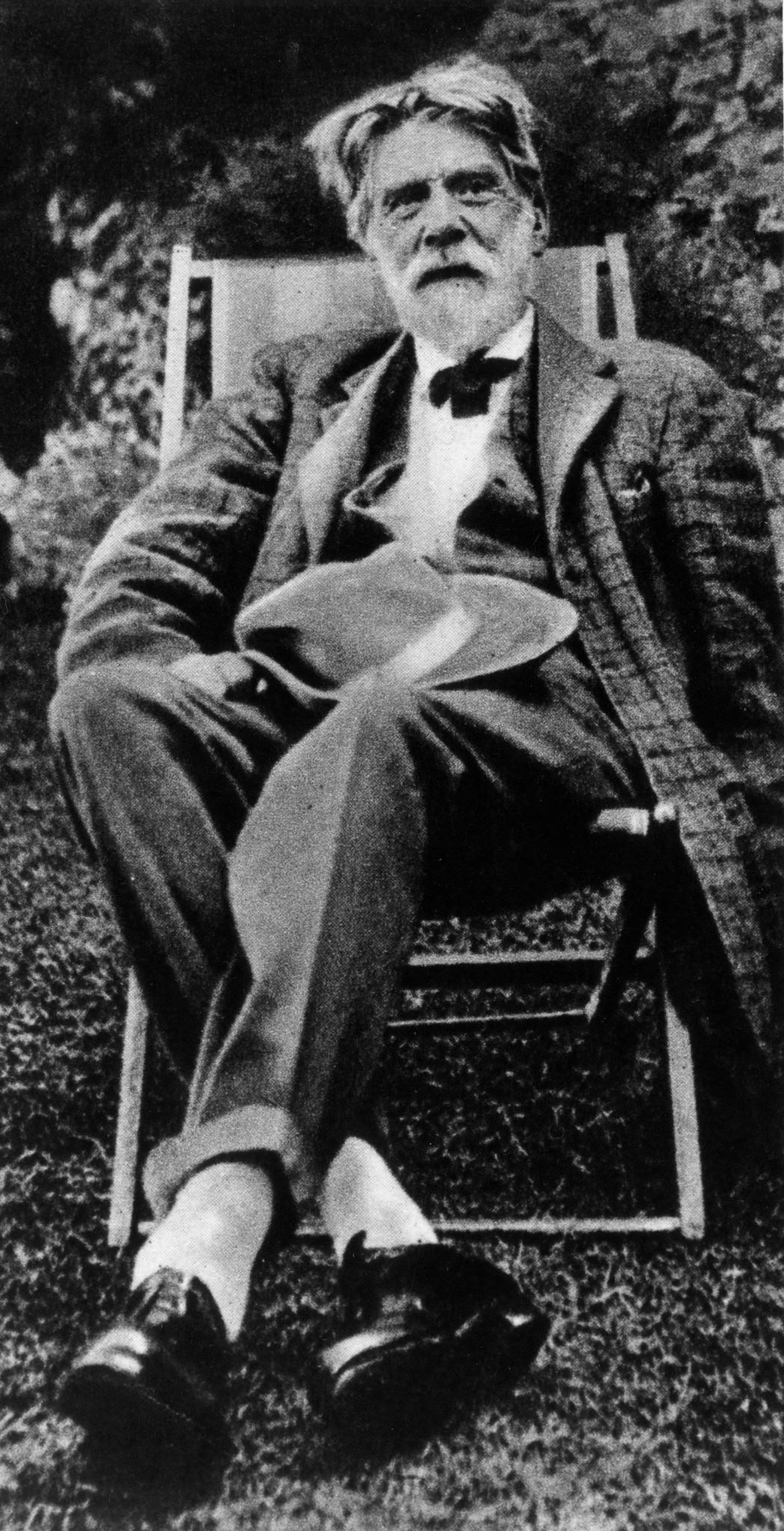 Robert Seymour Bridges (October 23, 1844 – April 21, 1930) was an English poet who served as Poet Laureate of the United Kingdom from 1913 until his death. Beyond his own classical
verse and hymns, Bridges is historically best known for preserving and publishing the poetry of his close friend,
Gerard Manley Hopkins), introducing one of the most original Victorian poetic voices to the modern world.
Robert Seymour Bridges (October 23, 1844 – April 21, 1930) was an English poet who served as Poet Laureate of the United Kingdom from 1913 until his death. Beyond his own classical
verse and hymns, Bridges is historically best known for preserving and publishing the poetry of his close friend,
Gerard Manley Hopkins), introducing one of the most original Victorian poetic voices to the modern world.
Born in Walmer, Kent, Bridges was educated at Eton College and Balliol College, Oxford, where he studied Classics. At Oxford, he formed deep, lifelong bonds within an
intellectual and aesthetic circle that heavily influenced late 19th-century British literature.
Initially choosing a career in medicine, Bridges trained at St Bartholomew's Hospital in London and worked as a casualty physician until a severe bout of lung disease in
1881 forced his retirement. He then dedicated his life entirely to writing, literary scholarship, and prosody (the study of poetic meter). In 1884, he married Monica
Waterhouse, with whom he had three children, including the poet Elizabeth Daryush.
Bridges and Gerard Manley Hopkins met as undergraduates at Oxford in 1863. Their relationship quickly became one of the most significant personal and literary
partnerships of the Victorian era.
Though their paths diverged when Hopkins converted to Catholicism and joined the Jesuit order while Bridges remained an Anglican agnostic, they maintained an intense,
continuous correspondence until Hopkins' death in 1889. Hopkins sent Bridges draft manuscripts of his experimental poems—including his groundbreaking "sprung rhythm"
works—relying on Bridges as his primary editor and audience.
Hopkins published almost no poetry during his lifetime. Upon Hopkins' premature death from typhoid fever in 1889, Bridges safeguarded the complete collection of
manuscripts. Recognizing that contemporary Victorian readers were not yet ready for Hopkins' radical style, Bridges held the poems for nearly 30 years, methodically
introducing a few in anthologies before publishing the first collected edition, Poems of Gerard Manley Hopkins, in 1918.
While Bridges lived a outwardly conventional life as a married man and Poet Laureate, his life intersects significantly with late Victorian queer literary history through
his Oxford network and his close proximity to early homosocial and homoerotic literary traditions:
Through Bridges, Hopkins met Bridges' distant cousin, Digby Mackworth Dolben, a young poet whose intense, romantic
charisma profoundly affected both men. Dolben was part of the Anglo-Catholic "Order of Saint Joseph" and wrote overtly homoerotic devotional poetry. Hopkins developed an
intense emotional and romantic attachment to Dolben, which scholars view as a crucial catalyst for Hopkins' own repressed homosocial and erotic sensibilities. Dolben's
tragic drowning at age 19 deeply affected both Bridges and Hopkins; Bridges later edited and published Dolben's poems in 1911.
Literary historians and queer theorists (such as Robert Martin and Richard Dellamora) have analyzed the correspondence between Bridges and Hopkins for its insights into
Victorian male intimacy. Hopkins' letters to Bridges often balance deep emotional dependence with intense theological debate. Bridges acted as a protective barrier around
Hopkins' work, carefully editing biographical notes to navigate the strict moral boundaries of the late 19th and early 20th centuries.
Bridges maintained friendships with several figures connected to the late Victorian "Uranian" poets—a group of writers who wrote subtly about male comradeship and
same-sex affection under the guise of classical Greek ideals. Though Bridges' own poetry adhered strictly to traditional forms and classical themes, his stewardship of
Hopkins' and Dolben's work preserved crucial texts of 19th-century queer poetic expression that might otherwise have been destroyed or lost.
References:
- Bridges, Robert (Ed.). The Poems of Gerard Manley Hopkins (1918).
- Bridges, Robert (Ed.). The Poems of Digby Mackworth Dolben (1911).
- Abbott, Claude Colleer (Ed.). The Letters of Gerard Manley Hopkins to Robert Bridges (1935, Oxford University Press).
- Martin, Robert Bernard. Gerard Manley Hopkins: A Very Private Life (1991, HarperCollins).
- Mariani, Paul. Gerard Manley Hopkins: A Life (2008, Viking).
- Guérard, Albert J. Robert Bridges: A Study of Traditionalism in Poetry (1942, Harvard University Press).
- Dellamora, Richard. Masculine Desire: The Sexual Politics of Victorian Aestheticism (1990, University of North Carolina Press).
- Bristow, Joseph. Effeminate England: Homoerotic Writing After 1885 (1995, Open University Press).
- Woods, Gregory. A History of Gay Literature: The Male Tradition (1998, Yale University Press).
- Edge, Simon. The Hopkins Conundrum (2017, Eye Books).
Support this project
This website is a passion project researched, developed, and funded entirely by me. If you find the content valuable and would like to help support the ongoing research and hosting costs, any contribution is deeply appreciated.
Thank you for keeping this independent resource alive!
My books on Amazon: Elisa Rolle's books
BACK TO HOME PAGE